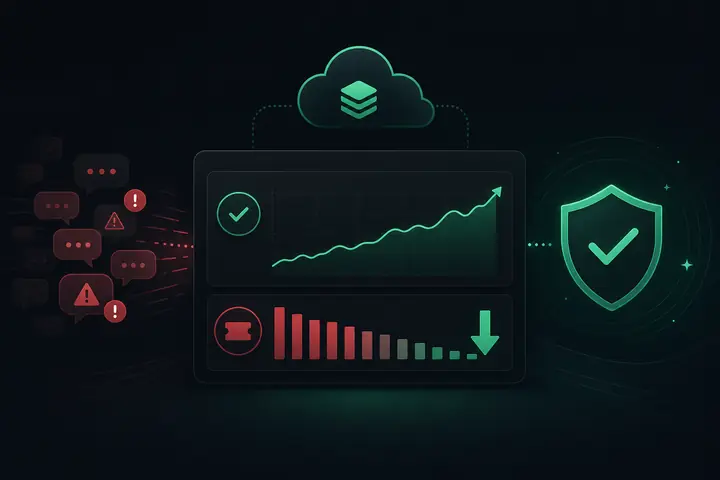
Incident management process is an inevitable reality in the modern business world. This concept, a cornerstone of business continuity and security, helps companies determine how they will deal with unexpected situations. Understanding the fundamental concepts of the incident management process and effectively managing this crucial process plays a decisive role in the success of companies.
1. What is an Incident?
An incident is an event that disrupts the normal operation of a system, such as security threats, errors, or other occurrences. These events can jeopardise business continuity and data security. Incident management is the process of quickly and effectively responding to these events.

2. Key Stages of Incident Management
Incident management typically consists of the following key stages:
- Identification and Notification: When a potential incident is detected, it should be quickly identified and reported to relevant parties.
- Assessment and Prioritization: The severity of the incident should be assessed and prioritised. Emergencies should be highlighted and resolved immediately.
- Response and Intervention: A quick and effective response to the incident is crucial. Intervention plans may come into play at this stage to prevent the situation from worsening.
- Improvement and Learning: After resolving the incident, teams should make necessary improvements to enhance system security and prevent similar incidents in the future. Learning processes should also be initiated based on how the incident was handled.
3. Incident severity levels (SEV1–SEV4) and update cadence
Severity levels decide who responds, how fast, and how often you update customers. Most teams use four levels. The table below is a common starting point; adjust the timings to match your SLAs.
| Severity | What it means | Example | Status page component status | Who responds | First public update | Update every |
|---|---|---|---|---|---|---|
| SEV1 — Critical | Core product down or data at risk for most or all customers | Login or checkout fails for everyone | Major outage | On-call immediately, incident lead, leadership informed | Within 15 minutes | 30 minutes |
| SEV2 — Major | A key feature is broken or badly slow for many customers | API error rate above 20% in one region | Partial outage | On-call within 15 minutes | Within 30 minutes | 60 minutes |
| SEV3 — Minor | Limited impact, and a workaround exists | Exports delayed, webhooks retrying | Degraded performance | Owning team, during business hours | Within 1 hour, if customers can notice it | 2–4 hours, or when status changes |
| SEV4 — Low | No real customer impact | Cosmetic bug, slow internal tool | Operational | Normal ticket queue | Usually none | — |
For wording at each stage, see our incident communication templates, and for what each status label means, the status definitions in our glossary.
4. The Importance of Incident Management
Incident management enhances a company’s resilience to challenges and ensures quick recovery. It is also critical for maintaining customer trust and preserving brand reputation. Incident management provides a framework to uphold data security standards and ensure business continuity.
In conclusion, understanding and effectively implementing incident management to cope with uncertainties in the business world is a vital element for success in modern companies. Therefore, every company should be familiar with the incident management process and integrate this to enhance their ability to deal with unexpected situations. Incident management increases a company’s resilience and ensures quick recovery, which is a critical step towards long-term success.
For more detailed information about incident management, please shoot a glance at StatusEntry offers.
FAQ
What are incident severity levels?
Severity levels rank how serious an incident is. Most teams use SEV1 (critical: core product down for most customers), SEV2 (major: key feature broken for many), SEV3 (minor: limited impact with a workaround) and SEV4 (low: no real customer impact). The level decides who responds and how often you update customers.
How often should you post incident updates?
A common rule is every 30 minutes for a SEV1, every 60 minutes for a SEV2 and every 2–4 hours (or when status changes) for a SEV3, even if there's nothing new. Each update should say when the next one will come.