Statusentry blog
Field notes on incident communication.
Practical writing on incident management, ITSM, scheduled maintenance, status pages and SaaS reliability.
All articles
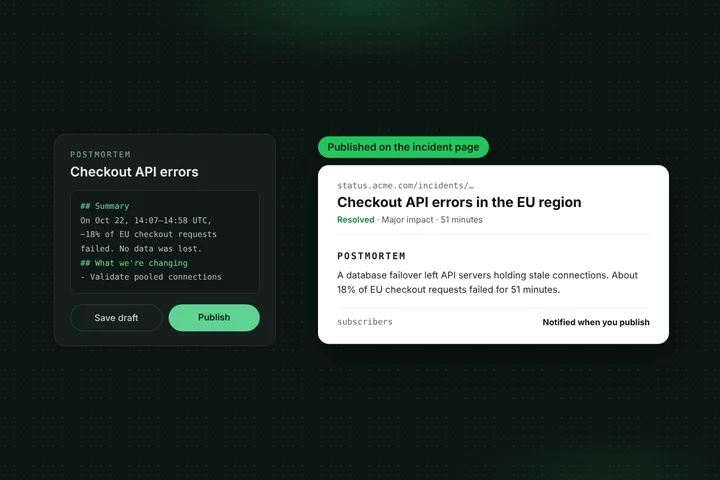
Postmortems on Your Status Page: Publish Incident Reports (With an Example)
Publish a postmortem on any resolved incident: write it in Markdown, keep it as a draft until it's reviewed, then show it on your public status page and notify subscribers. Includes a full example.
Read article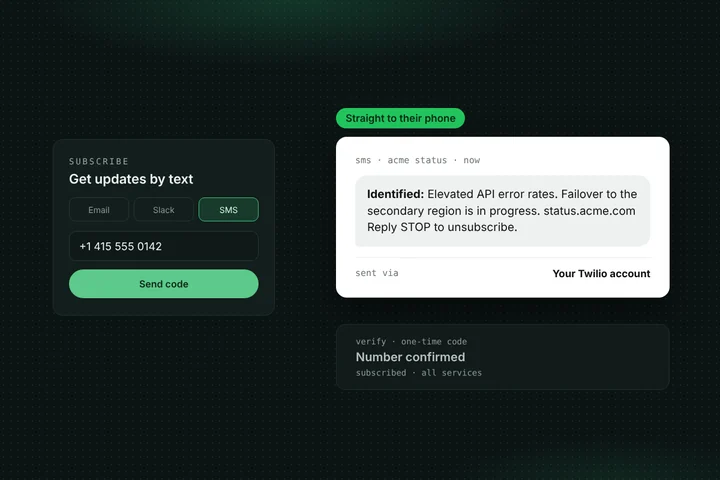
SMS Notifications: Text Your Status Page Subscribers Through Your Own Twilio Account
Subscribers can now follow your Statusentry status page by text message. Connect your own Twilio account once, and incident updates and new maintenance reach their phones within seconds.
Read article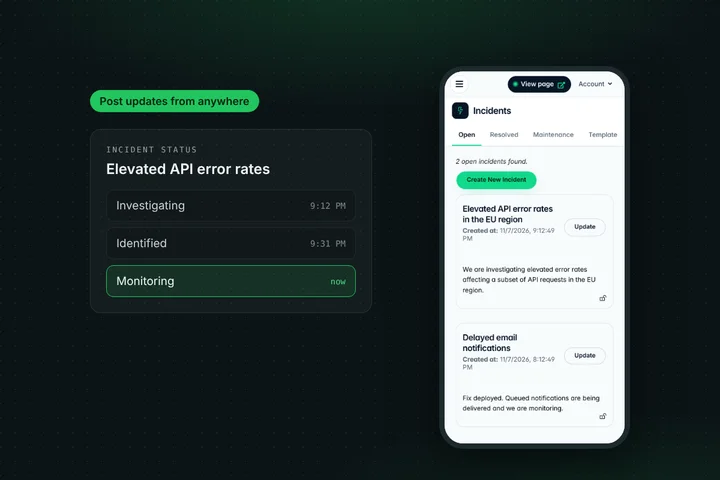
A Mobile-Friendly Admin Panel: Post and Update Incidents From Your Phone
The Statusentry admin panel now works properly on your phone, so whoever is on call can create, update and resolve incidents from anywhere, without opening a laptop.
Read article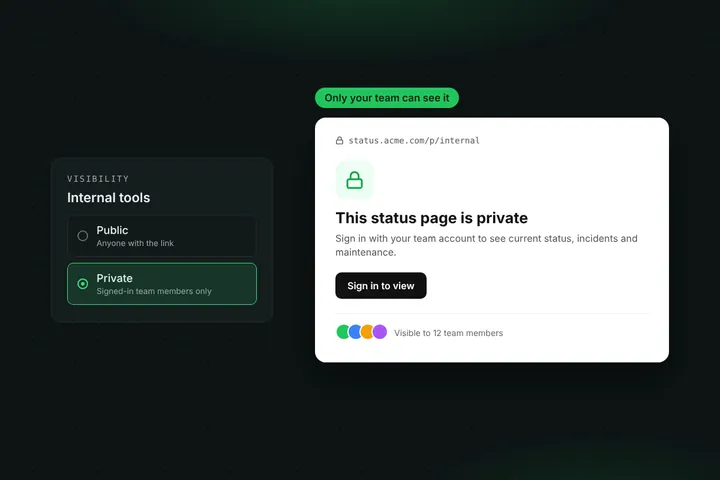
Private Status Pages: An Internal Status Page Only Your Team Can See
Make any Statusentry status page private, so only signed-in members of your team can see it — for internal tools, staging environments and systems customers never use.
Read article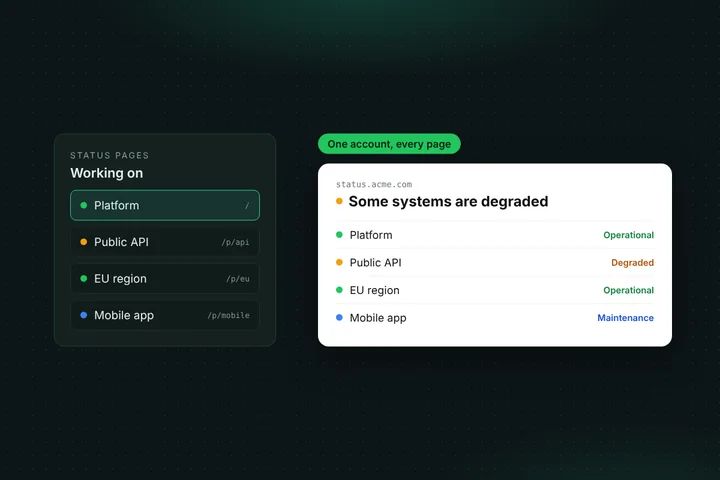
Multiple Status Pages: One Account, a Separate Page for Every Product
Run a separate public status page for each product, brand or region from one Statusentry account — each with its own services, incidents, subscribers, branding and custom domain, plus an optional directory page that lists them all.
Read article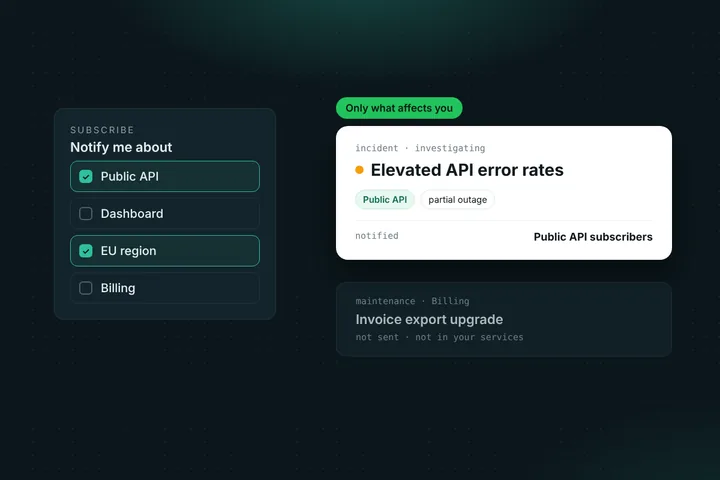
Service-Based Subscriptions: Let Subscribers Follow Only the Services They Use
Subscribers can now pick the services they care about on your status page and only get incident and maintenance notifications for those services — by email, Slack or webhook. How it works, who gets notified and how it compares to Statuspage's component subscriptions.
Read article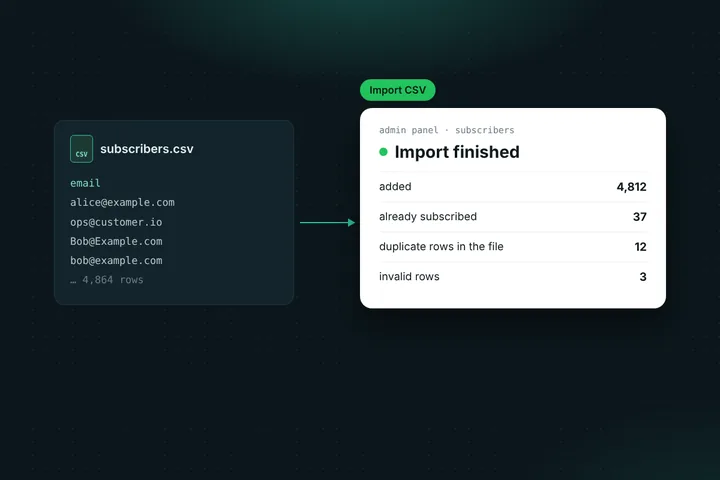
Add and Import Status Page Subscribers from a CSV File
Admins can now add email and webhook subscribers from the Statusentry admin panel, or import up to 5,000 at once from a CSV file. The file format, what happens to each row, and how to move your subscribers from Atlassian Statuspage.
Read article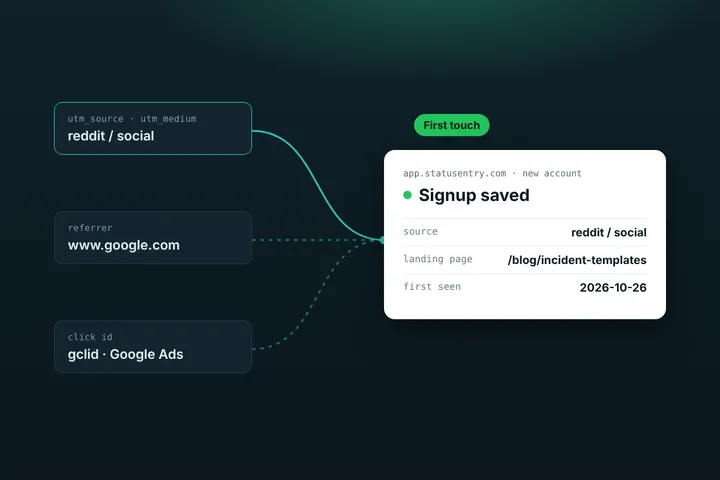
Signup Source Tracking: Know Where Your Customers Really Come From
Analytics tells you where visitors come from. It rarely tells you where customers come from. Why signup source tracking matters for a SaaS business, and a practical way to set it up with UTM tags, referrers, ad click IDs and a first-touch cookie.
Read article
How to Choose a SaaS Product: Criteria That Matter After the Demo
Every SaaS vendor looks good in the demo. The differences show up during outages, growth spurts and urgent support tickets. The criteria that predict those moments — reliability, scalability, support response time and more — and how to check each before you sign.
Read article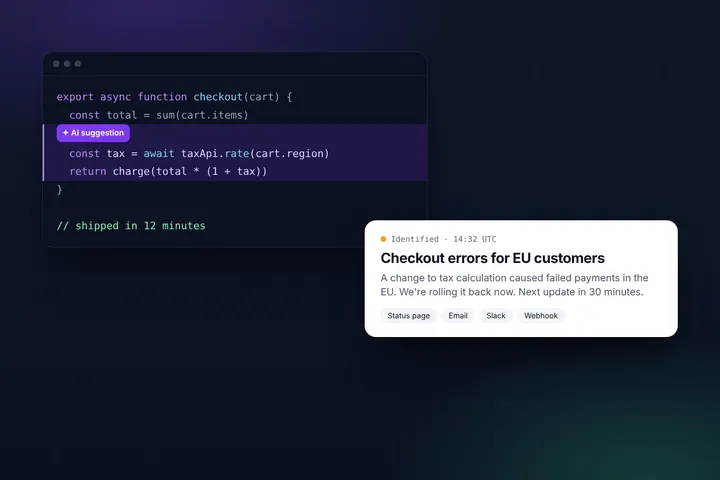
Vibe-Coded vs. Professionally Engineered Software: What Changes After Launch
On launch day, a vibe-coded app and a team-built product can look identical. The differences show up later — in security, maintenance and what happens when things break. A fair comparison, and how to tell which one you're buying.
Read article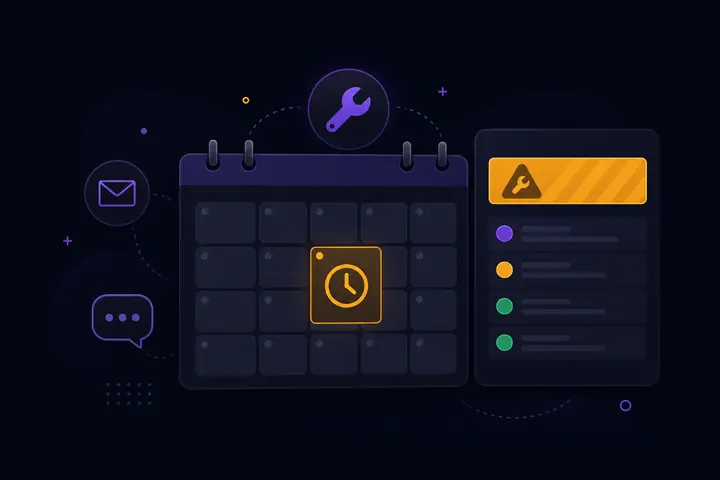
PHP2Shell: Your Servers Need an Emergency Patch. Your Users Need an Update.
Two critical PHP flaws leaked early and sent teams scrambling to patch — some took their services offline entirely. What happened, what to patch, and why the update your users see matters as much as the one on your servers.
Read article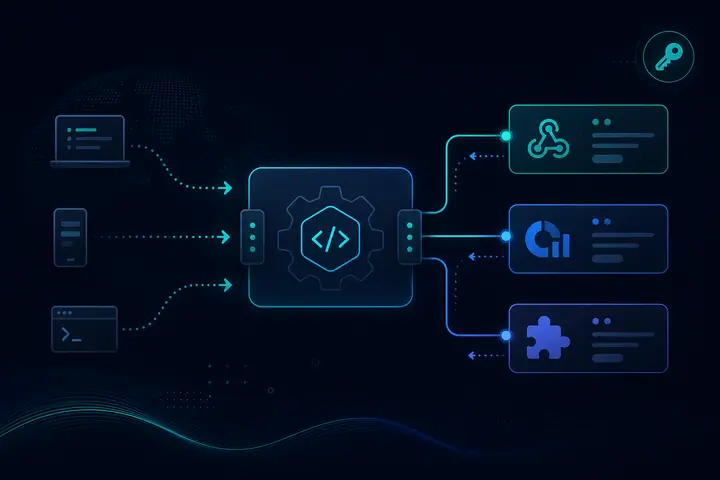
X (Twitter) Integration: Post Status Page Updates Automatically
Statusentry can post your public incidents and scheduled maintenance to X automatically. Why status updates belong on X, how to connect your accounts, and how to write updates that work in a busy feed.
Read article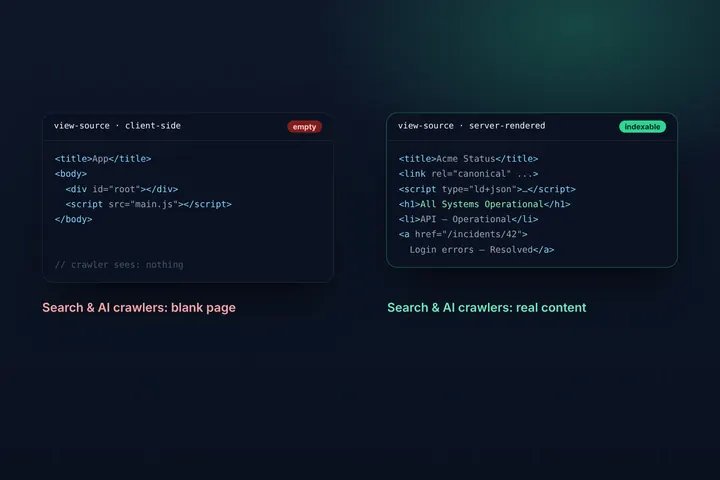
Status Pages in the Age of AI Search: Making Your Uptime Answerable
People now ask ChatGPT and Perplexity whether a service is down. What generative engine optimization (GEO) means for status pages, what makes one answerable, and how we made statusentry.com readable for AI search and agents.
Read articleVibe Coding and Incidents: Why Your AI-Built App Needs a Status Page
Vibe-coded apps ship fast but break in ways nobody fully understands. Why their incidents take longer to diagnose, how to write status updates before you know the cause, and a minimum reliability setup.
Read article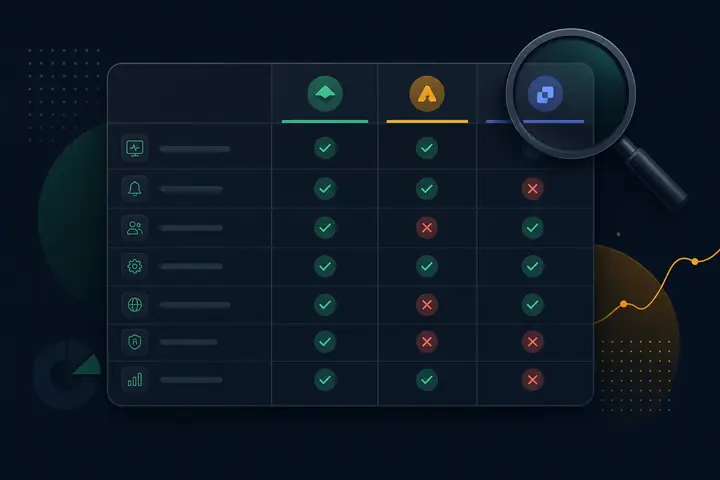
Open-Source Status Page Tools: 7 Self-Hosted Options Compared
Uptime Kuma, Upptime, Gatus, Cachet, cState, OpenStatus and Kener compared on monitoring, incidents and subscriber notifications, plus the real cost of self-hosting versus a hosted status page.
Read article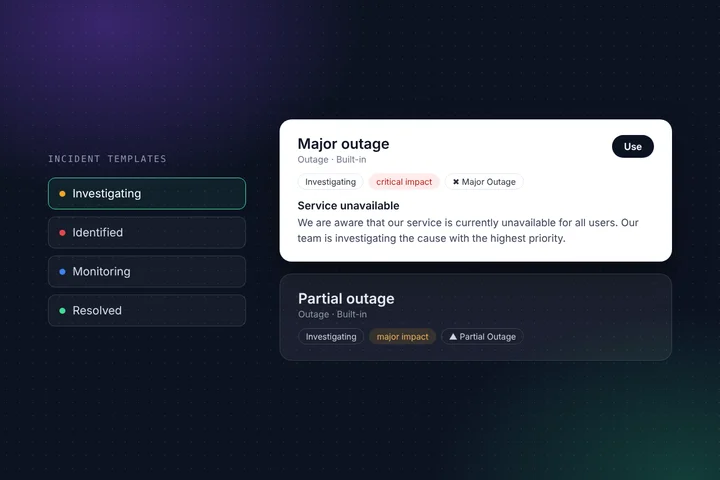
Incident Templates: Faster, Consistent Status Page Updates
Incident templates prefill the status, impact and message of a new incident, so your first status page update goes out in seconds. Why they matter, how they work in Statusentry and what to look for in a Statuspage alternative.
Read articleIncident Communication Templates: Status Page, Email & Social
Copy-paste incident communication templates for every stage of an outage: status page updates, customer emails, social posts, banners and internal messages.
Read article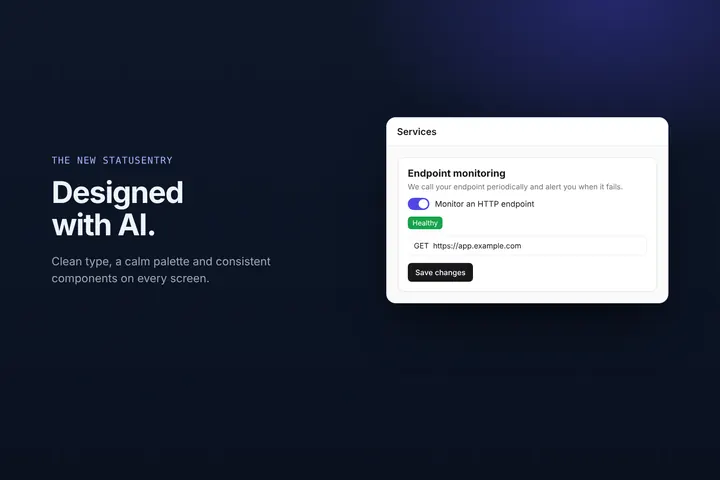
A Fresh New Look for Statusentry — Designed with AI
Cleaner typography, a calmer palette and consistent components across the app. What's new in the Statusentry interface, how we built it with an AI assistant, and how AI is changing the way we work.
Read article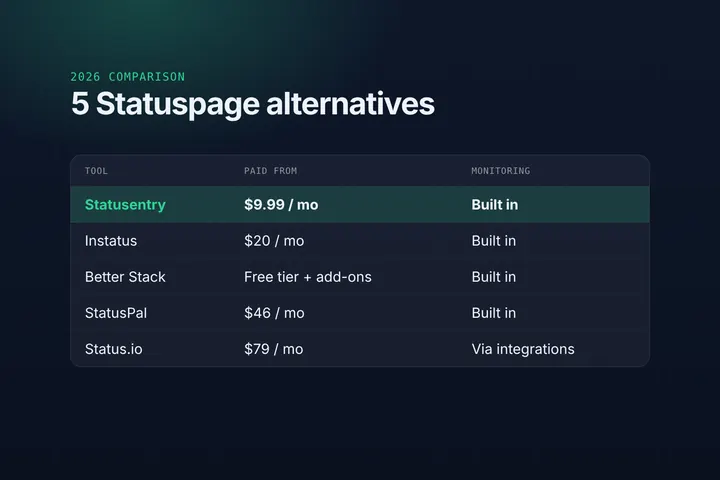
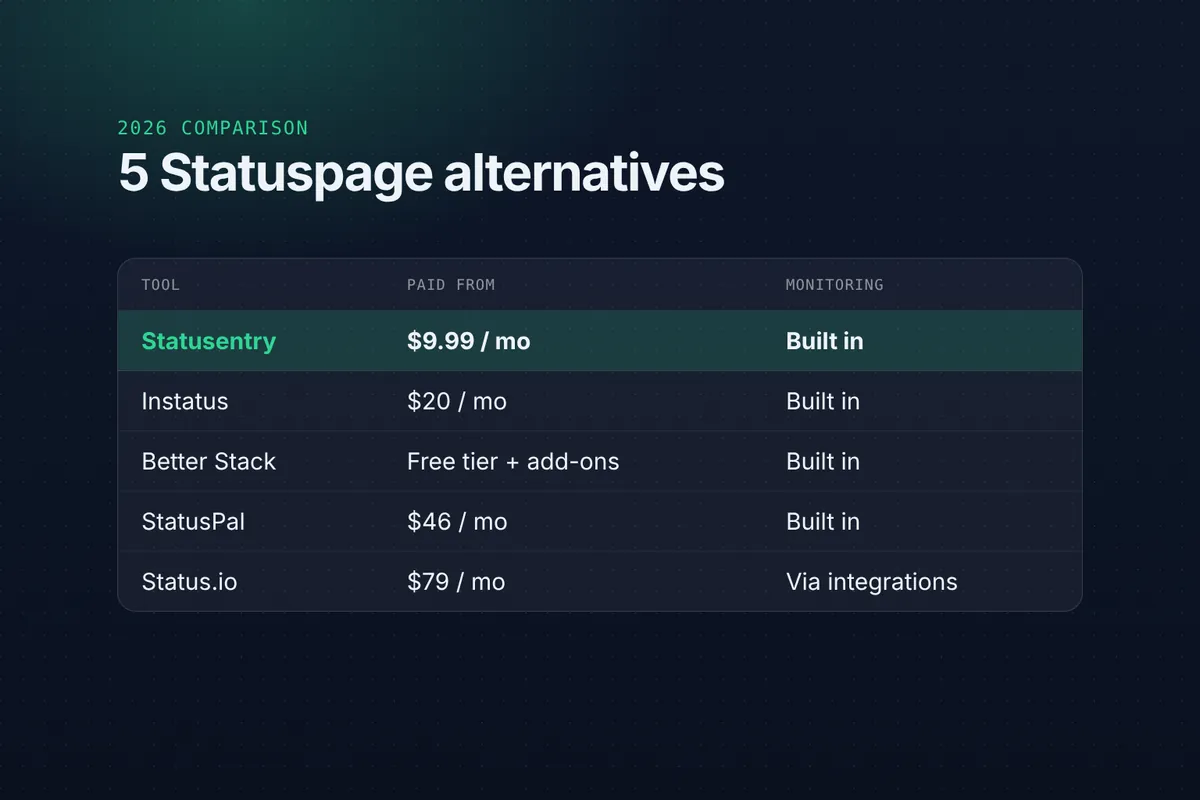
Best Statuspage Alternatives in 2026: 8 Tools Compared
Statusentry, Instatus, Better Stack, StatusPal, Status.io, OnlineOrNot, UptimeRobot and open-source options compared with Atlassian Statuspage on features, limits and current 2026 pricing.
Read articleWhy Server-Side Rendering Matters for Status Page SEO
When customers search “is it down?”, your status page should be the answer. Why client-side rendered pages are invisible to search engines and AI crawlers, and how server-side rendering fixes it.
Read article